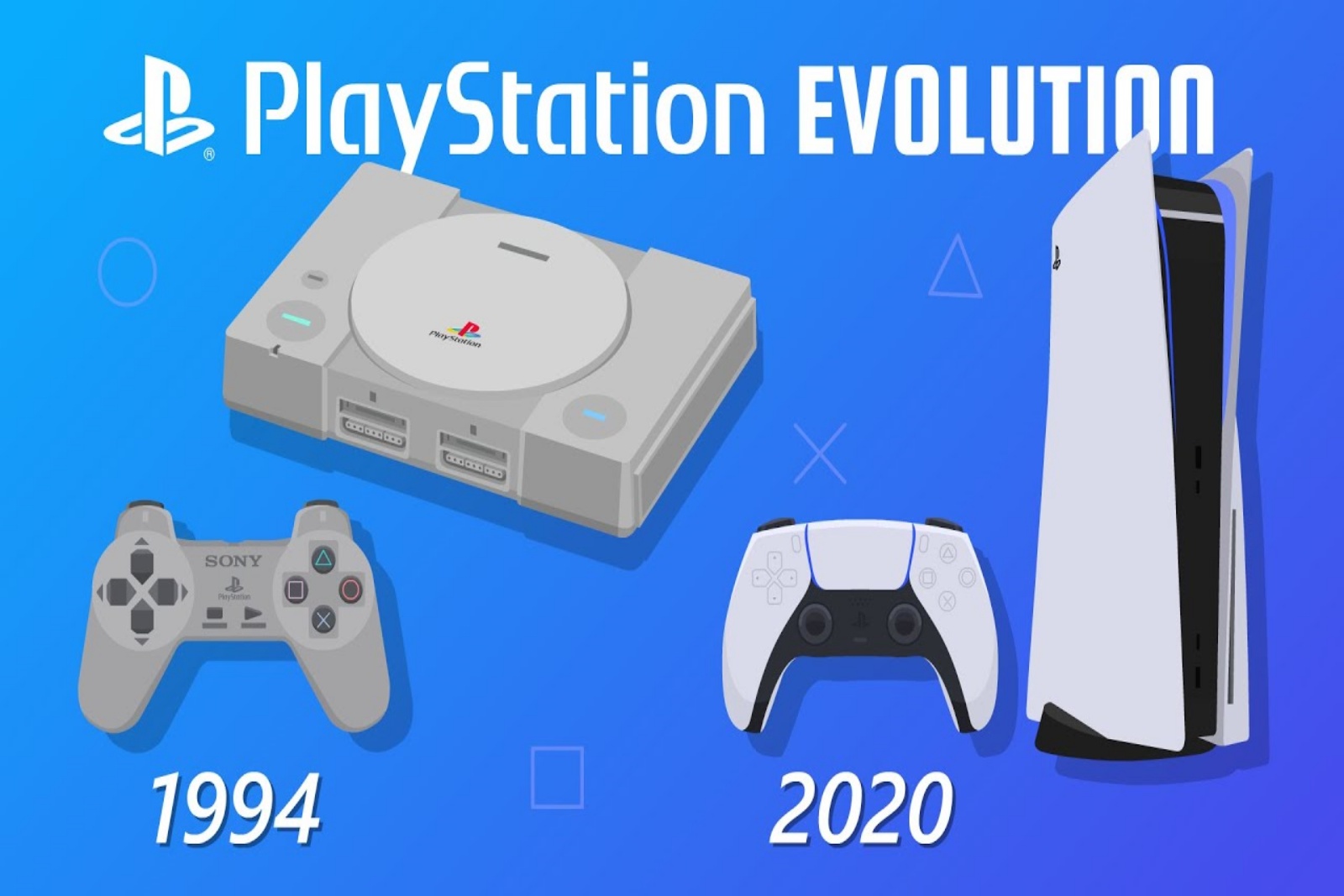
The PlayStation brand has been a cornerstone of the gaming industry for over three decades. From its unexpected origins as a failed Nintendo partnership to the powerhouse PlayStation 5, Sony’s consoles have shaped how we play, connect, and experience video games. This is the story of that evolution.
The Accidental Beginning: PlayStation (1994)
The story of PlayStation begins not with Sony, but with a deal gone wrong. In the late 1980s, Nintendo partnered with Sony to develop a CD-ROM add-on for the Super Nintendo. However, Nintendo controversially backed out and partnered with Philips instead, leaving Sony with a prototype and a burning desire to compete.
Sony’s gamble paid off spectacularly. The original PlayStation, released in Japan on December 3, 1994, and in North America in September 1995, was a revolutionary machine.
- The CD-ROM Advantage: The PlayStation’s use of CD-ROMs was a game-changer. A CD could hold over 660MB of data, compared to the maximum of 64MB on a Nintendo 64 cartridge. This allowed for richer, more cinematic games and significantly reduced manufacturing costs.
- The 3D Revolution: Powered by a 32-bit R3000 CPU, the PlayStation could render millions of colors and generate hundreds of thousands of polygons, bringing complex 3D worlds into homes for the first time.
- Impact and Legacy: It was an instant hit, eventually selling over 102 million units worldwide. The console birthed iconic franchises that are still beloved today, including Final Fantasy VII, Metal Gear Solid, Tomb Raider, Gran Turismo, and Crash Bandicoot. It also introduced the classic PlayStation shapes (△○×□) on its controller, a design language that remains synonymous with the brand.
The Golden Era: PlayStation 2 (2000)
If the PS1 was a revolution, the PlayStation 2 was a cultural phenomenon. Released in 2000, the PS2 became the best-selling video game console of all time, with over 158 million units sold.
- The DVD Trojan Horse: The PS2’s secret weapon was its DVD player. At a time when standalone DVD players were expensive, the PS2 offered one built-in for just $299. This made it an irresistible purchase not just for gamers, but for anyone wanting to watch movies in high quality, expanding the market exponentially.
- The Golden Age of Games: The PS2’s library is often considered the greatest in gaming history. The technology hit a sweet spot, allowing for ambitious games with shorter, more affordable development cycles. Classics like Grand Theft Auto: San Andreas, God of War, Final Fantasy X, Metal Gear Solid 2, and Kingdom Hearts defined a generation.
- Backward Compatibility: A significant feature for early adopters was the ability to play original PlayStation games, easing the transition to the new console.
The Rocky Road to Redemption: PlayStation 3 (2006)
The PlayStation 3 era began with immense challenges. Sony’s confidence after the PS2’s success led to a console that was powerful but problematic.
- The High Price of Innovation: Launching with a $499 price tag for the 20GB model and $599 for the 60GB model, the PS3 was by far Sony’s most expensive console. This was largely due to the inclusion of a Blu-ray player, which helped Sony win the format war against HD-DVD but alienated many consumers initially.
- The Cell Processor Conundrum: The console’s unique Cell processor was notoriously difficult to develop games for. This led to a library of poor-performing multi-platform games compared to the Xbox 360 and made development costs soar.
- Turning the Ship Around: The PS3 eventually found its footing. A price drop, the introduction of the more affordable Slim model, and a gradual stream of high-quality exclusives like The Last of Us, Uncharted 2, and LittleBigPlanet helped it sell over 87 million units. It also introduced the PlayStation Network and the Trophy system, laying the groundwork for modern online gaming.
The Comeback King: PlayStation 4 (2013)
After the missteps of the PS3, Sony made a “safe but needed return to form” with the PlayStation 4, focusing on what players really wanted: great games and a developer-friendly architecture.
- Putting Developers First: Sony abandoned the complex Cell architecture for a more standard PC-like design. This made development much easier and immediately resulted in a stronger, more diverse game library.
- Social and Connected: The PS4 heavily integrated social features, allowing players to easily share gameplay clips and broadcast their sessions online. The introduction of the PS4 Pro in 2016 also catered to players wanting 4K resolution and improved performance.
- A Legacy of Exclusives: The PS4’s library is considered one of the strongest in PlayStation history, boasting critically acclaimed exclusives like God of War, Marvel’s Spider-Man, Horizon Zero Dawn, Bloodborne, and Ghost of Tsushima. It sold over 102 million units, cementing Sony’s dominance in the 8th generation.
The Future is Now: PlayStation 5 (2020)
The PlayStation 5 represents a “significant leap forward” in gaming technology. Launched in November 2020, it focuses on delivering immersive, high-fidelity experiences with lightning-fast load times.
- The Speed of the SSD: The PS5’s custom SSD is its standout feature. It drastically reduces loading times, nearly eliminating them in many games, and allows for larger, more detailed game worlds to be streamed in real-time.
- Performance and Fidelity: With an octa-core AMD Zen 2 CPU and RDNA 2 GPU, the PS5 can deliver stunning 4K visuals at high frame rates, supporting features like Ray Tracing and 120Hz output for supported displays.
- The Immersive DualSense: The new DualSense controller offers advanced haptic feedback and adaptive triggers, allowing developers to create more tactile and immersive experiences, like feeling the tension of a bowstring or the texture of different surfaces.
- A Celebration of PlayStation: The PS5 is backward compatible with almost all PS4 games, and through PlayStation Plus, players can access a vast library of classics from the PS1, PS2, and PS3 eras, making it a console that celebrates the brand’s entire history.
A Legacy of Innovation
From the CD-ROM revolution of the PS1 to the lightning-fast SSD and immersive haptics of the PS5, the evolution of PlayStation is a story of ambition, resilience, and constant innovation. It’s a legacy built on groundbreaking technology, unforgettable games, and the unwavering loyalty of its players.